Solar Bicycle
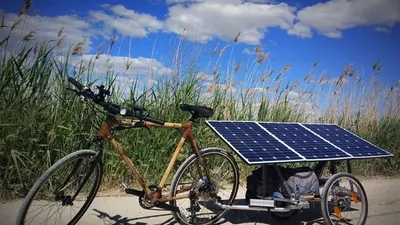
Electric bicycle with a solar panel trailer
An electric bicycle with a three-panel solar trailer travelled 3,890 km around Spain
The engineer Eugenio García-Calderón and his colleagues at Zima Project, the forerunner of Light Humanity, built an electric bicycle that recharged from the sun: a motor in the rear wheel and a trailer with three photovoltaic panels. In 2018, Eugenio rode it 3,890 km around Spain in Pedaleo Solar, the campaign against the sun tax.
- What it is: a pedal-assist electric bicycle that charges its batteries with three solar panels mounted on a trailer.
- Who made it: Eugenio García-Calderón Huerta, an engineer specialising in renewables, with his colleagues at Zima Project and the help of partner companies.
- When: it was unveiled on 1 June 2018, left Madrid two days later and returned in early September.
- Why: to call for an end to the sun tax and bring self-consumption and sustainable mobility closer to people.
- Result: 3,890 km and 25 cities with Solar Pedalling, and dozens of local exhibitions.
- What came next: the solar lamps of Light of the Amazon and, in 2019, the Solar Delivery Tricycles.

An activist engineer and a solar bicycle against the sun tax
When Eugenio García-Calderón finished university, the so-called sun tax was in force in Spain and solar energy had stalled. He worked at a wind energy company until he decided to become an energy activist and build an electric bicycle with solar panels, as he told Energías Renovables in 2024.
- The challenge: in February 2018, Zima Project presented its first project in a video: a cause, ending the sun tax, and a challenge, riding around Spain on a solar bicycle.
- The idea: to show that solar energy, as well as being sustainable, could power any vehicle, as Yorokobu summed it up in 2021.
- The effort: building the bike and raising funds for the trip was, Eugenio recalled in that article, a struggle with himself.
Zima Project built the solar bicycle with the help of its partners
Zima Project described itself as a young non-profit NGO with a motto, “One cause, one adventure”: feats and challenges to draw attention to social causes (Energías Renovables). Its website said the team had built the bicycle themselves, with the help of their partners (zimaproject.org, archived).
- Its builders: Eugenio, an engineer specialising in renewables; María, a translator and gender expert; and Nasib, a telecommunications engineer: “its builders and ideologists”, according to Ciclosfera.
- The partners: Zima’s website listed Bamboo Koa, Bikelec, E13 Batteries, Monsolar, RbO, Som Energia and EXUS Management Partners.
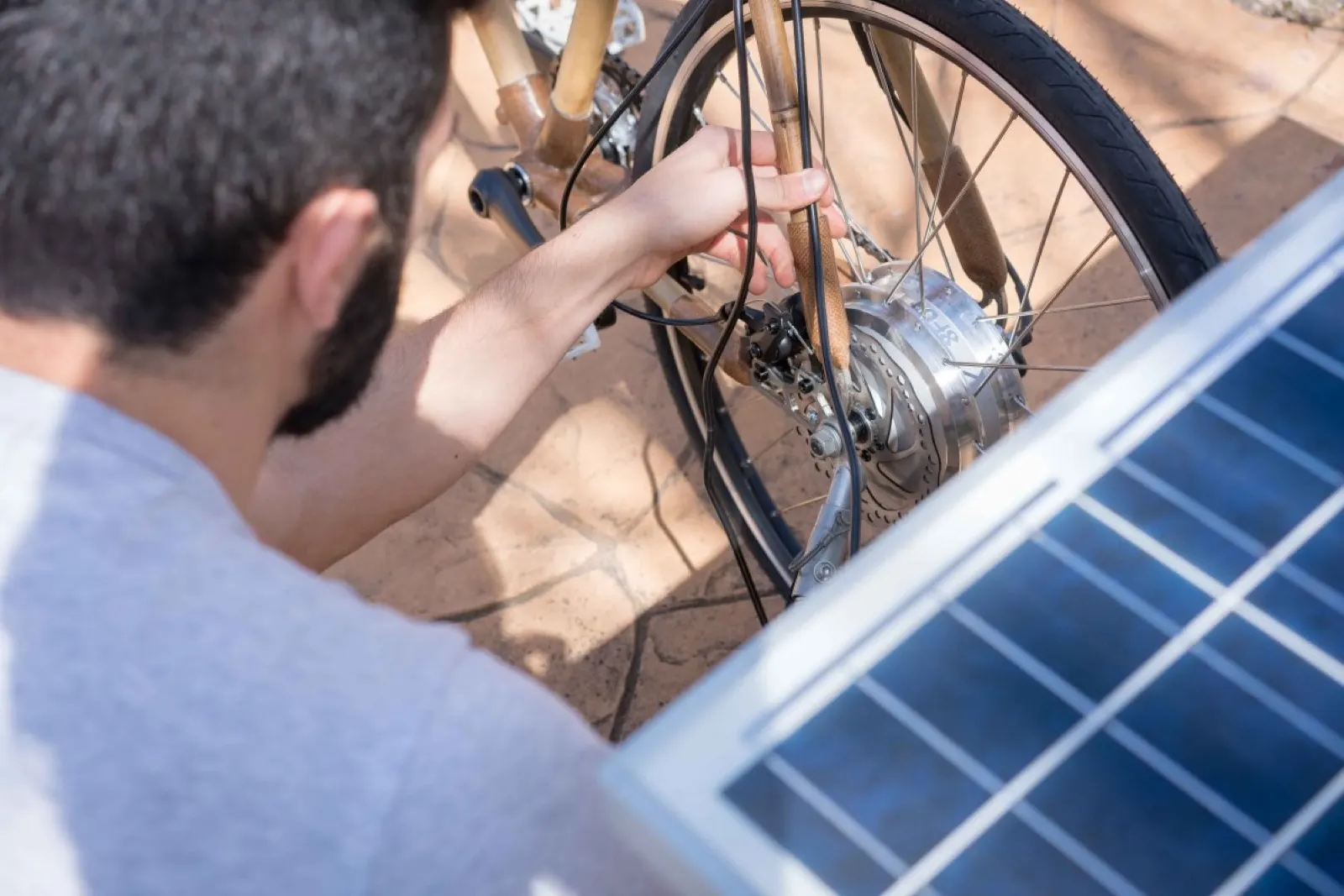
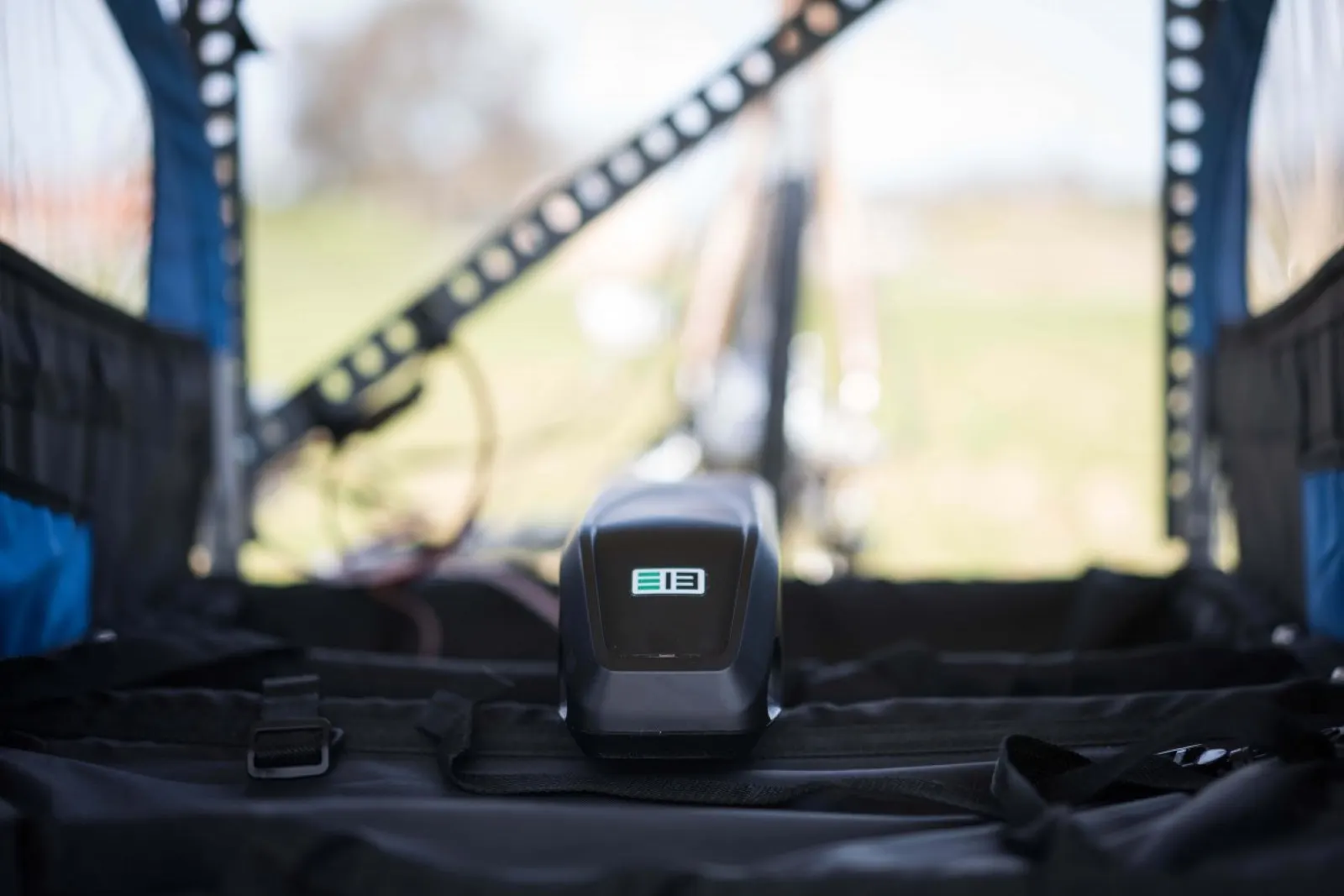
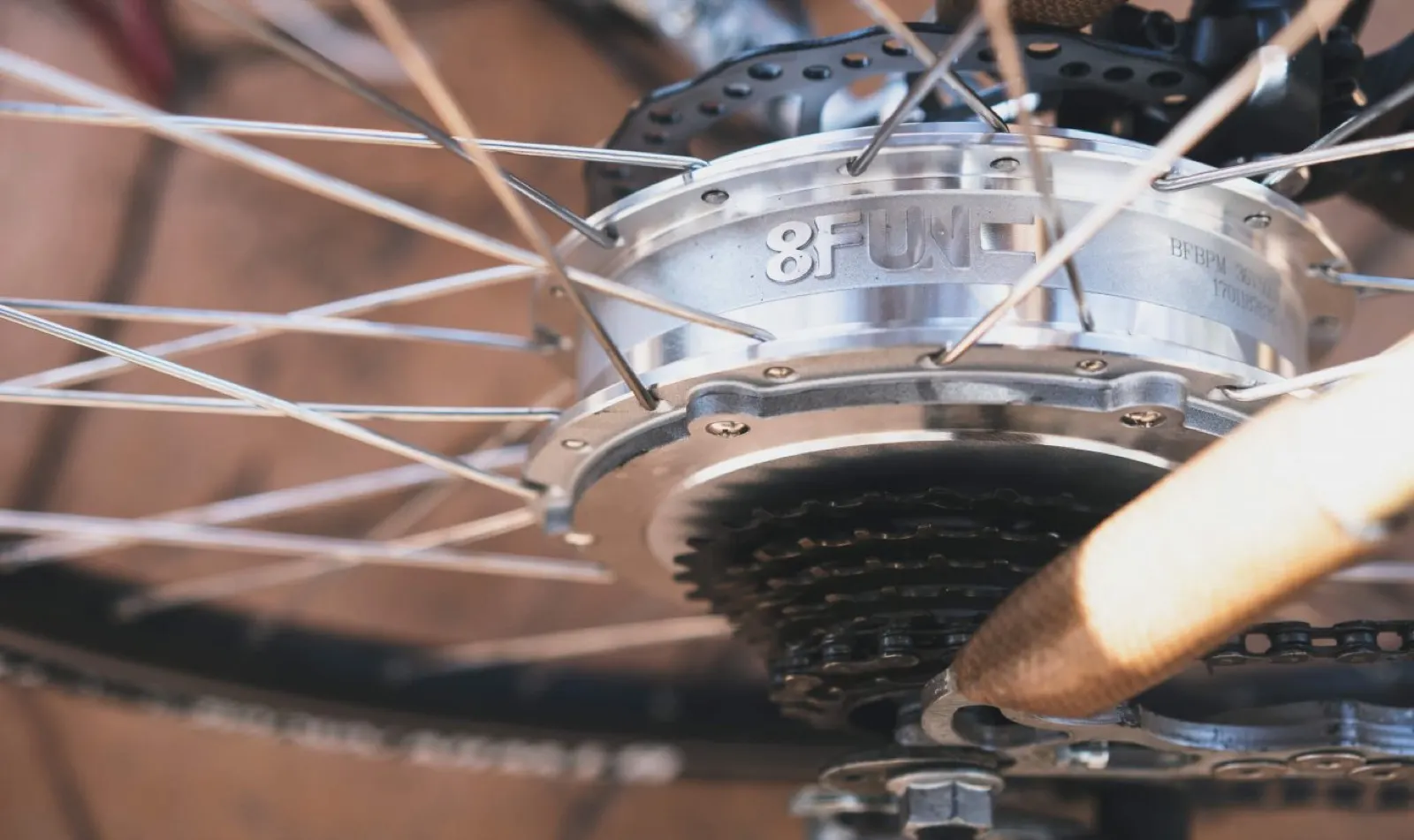
- The brands, in plain sight: Zima’s photos show Bamboo Koa on the frame, 8FUN on the motor and E13 on the battery.
- Funding: according to its website, 100% came from donations by people who believed in its causes.

How the solar bicycle worked: pedal assist and energy from the trailer
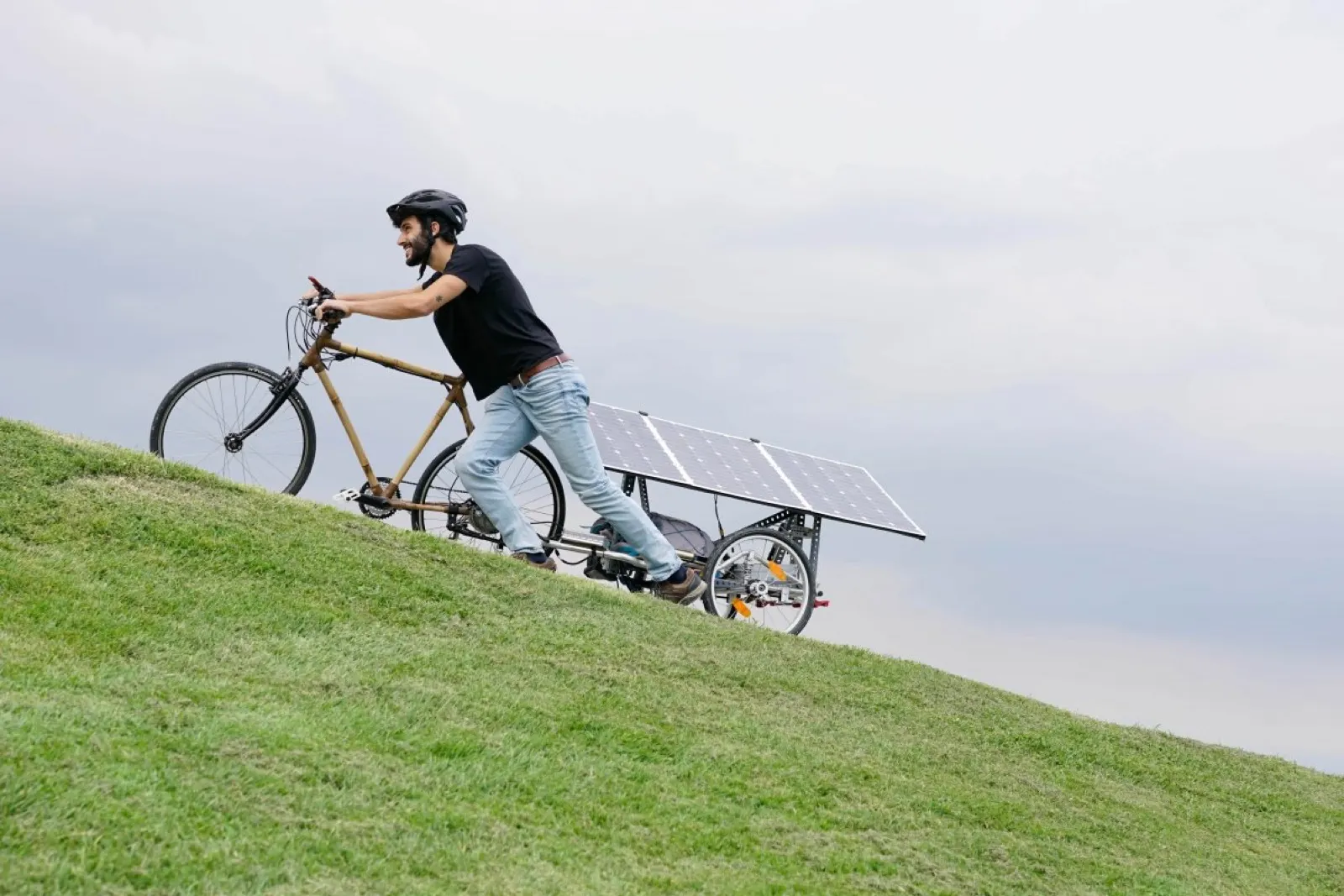
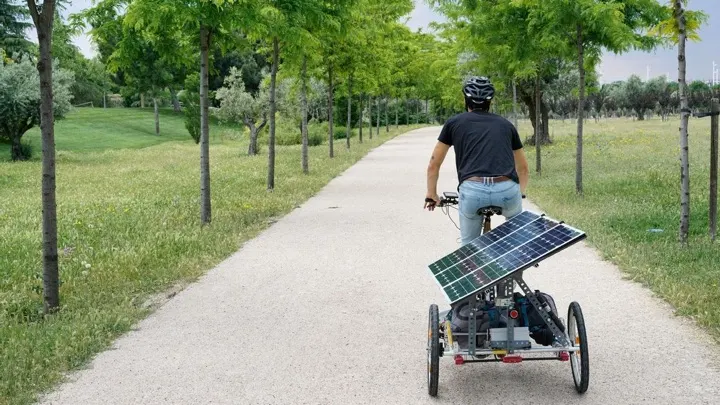
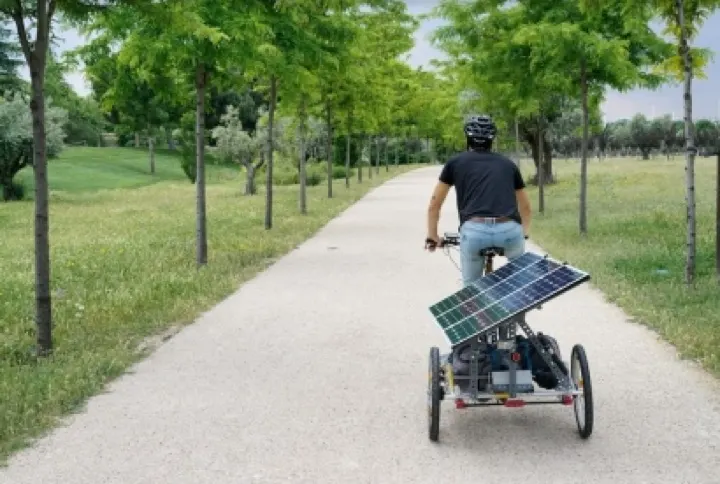
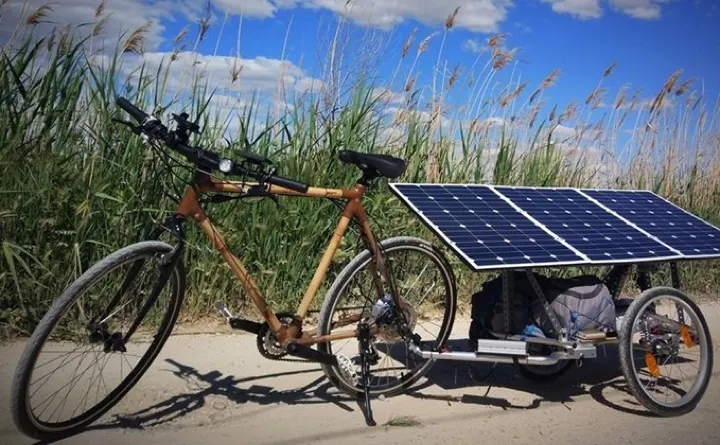
The Solar Bicycle combined two parts: a pedal-assist electric bike and a trailer that produced its own energy with photovoltaic panels.
On the bike: a motor in the rear wheel and up to 25 km/h
- Motor: in the rear wheel, to assist pedalling. It did not turn it into a motorbike, María explained: it just made the effort more bearable (elDiario.es).
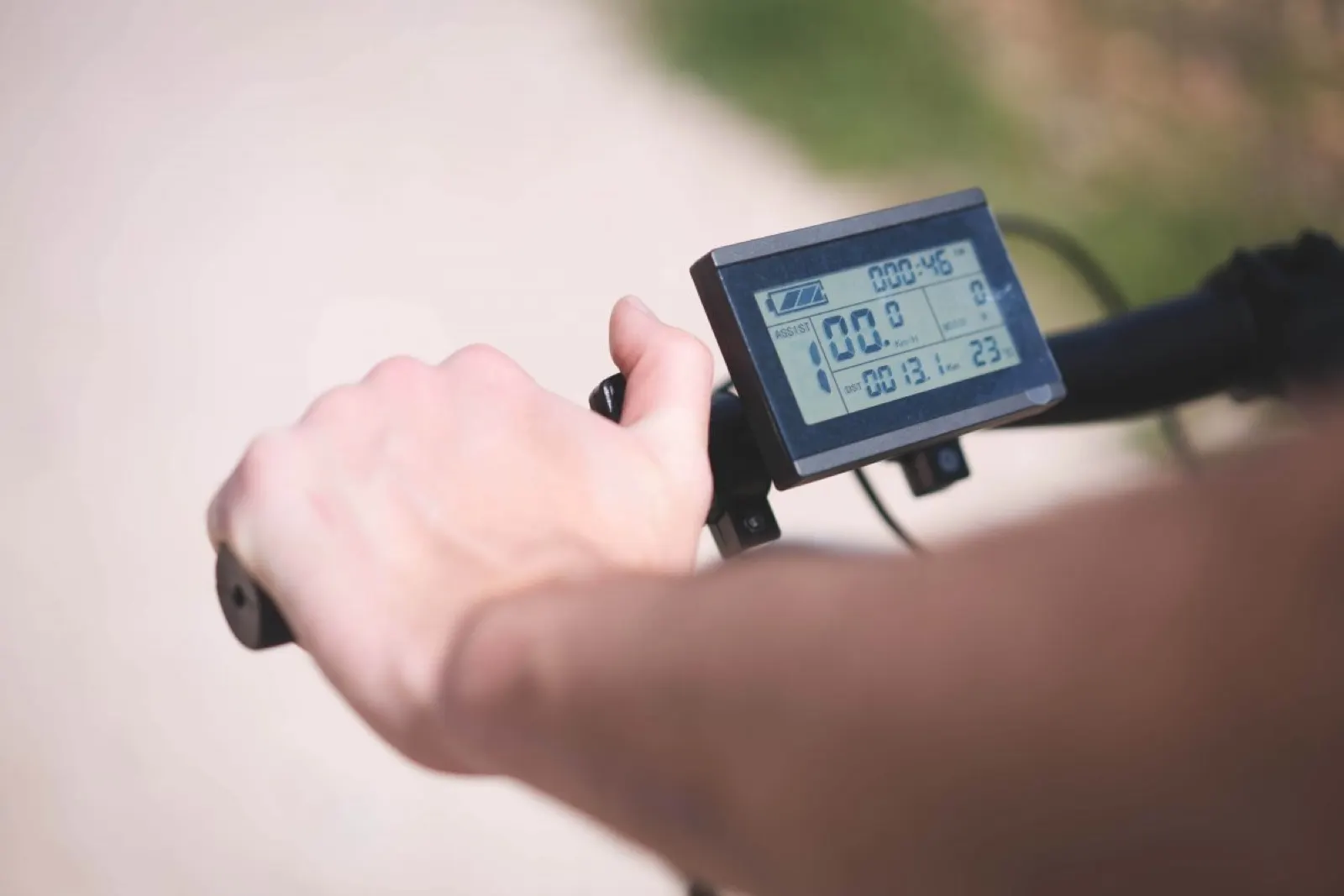
- Speed: it could reach 25 km/h (El Periódico de la Energía).
The energy: three solar panels on the trailer, custom batteries and a charge controller
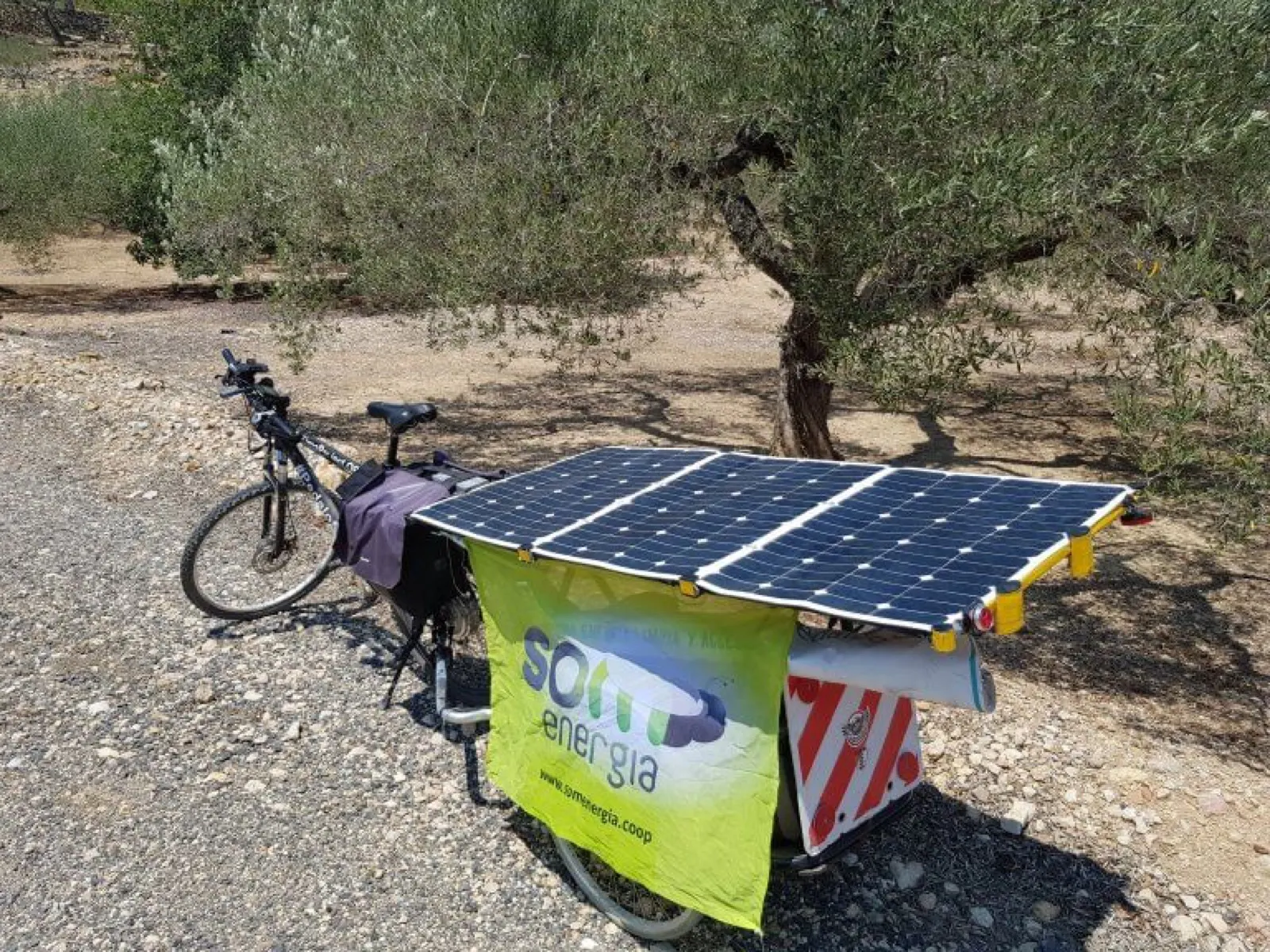
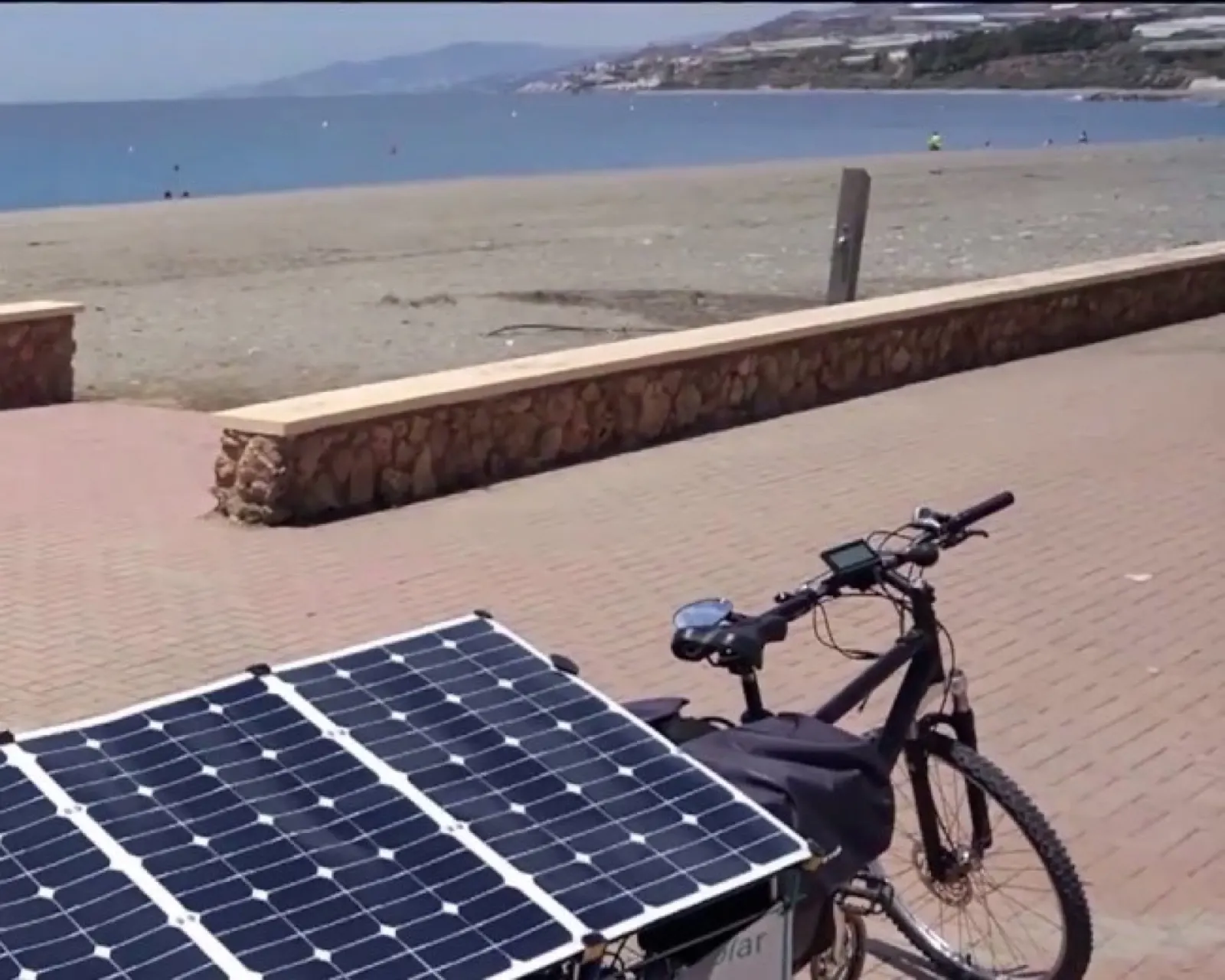
- Panels: three, on the trailer. In 2024 Eugenio spoke of “three 180-watt solar panels” (Energías Renovables); in 2018 he said they weighed a kilo each (Castro Punto Radio).
- Batteries: custom-made and charged by the panels (Ciclosfera).
- Charge controller: the “brain of the whole circuit”, in María’s words (elDiario.es).
- All on board: with the batteries, the charge controller and the backpacks, the whole rig was “a vehicle that runs on solar energy”, Eugenio summed up (Castro Punto Radio).
A bamboo frame at the presentation, a mountain bike in the photos from the road
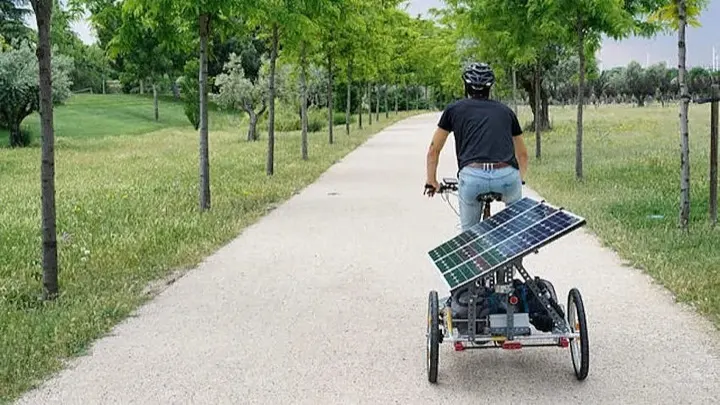
In the presentation photos the bike has a bamboo frame, and that is how the press described it in May and June 2018 (Energías Renovables). In the images from the road, however, the trailer is hitched to a dark-framed mountain bike.
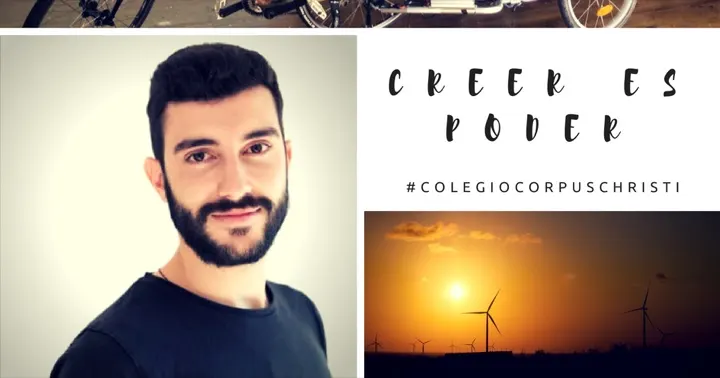
- 1 June: the bamboo bike and its trailer were in the assembly hall of Colegio Corpus Christi in Madrid, where Eugenio presented the project (school blog); the story is told in School Outreach.
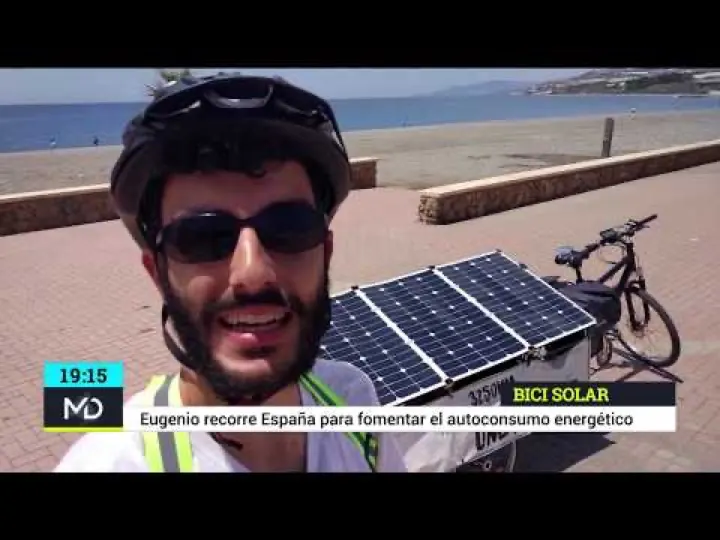
- Mid-June: in the Telemadrid video from Almería, with about 1,000 km covered, the trailer follows a black mountain bike.
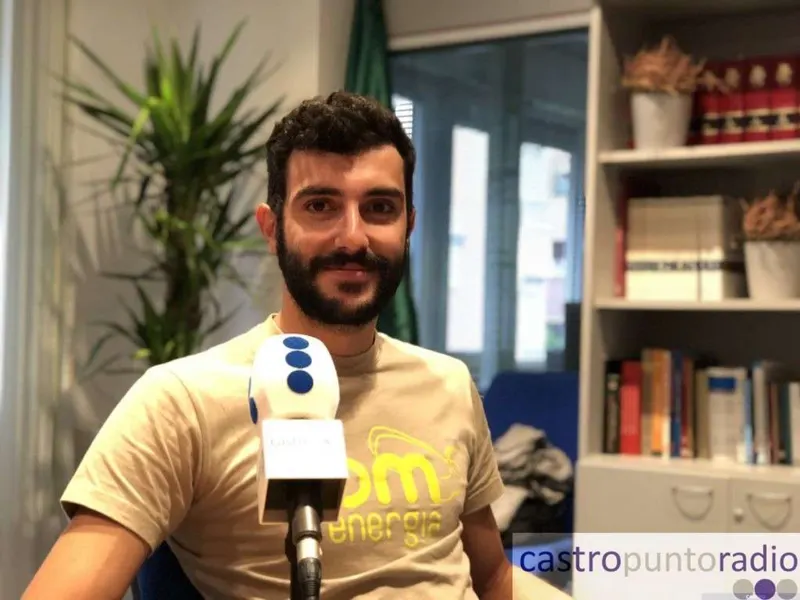
- August: in Castro Urdiales, Eugenio described it as “a conventional bicycle” whose rear wheel had been replaced to make it electric (Castro Punto Radio).
Dozens of local exhibitions, with the bike as a showcase for self-consumption
The bike was not just the campaign’s vehicle: it was also its showcase. Zima Project announced that at each destination it would exhibit it in schools, institutions and public places (Energías Renovables); by the end, the final tally spoke of dozens of local exhibitions (Energías Renovables).
- Each stage, in principle, two days: one to arrive and another to set up an information stand next to the bike and invite the regional media (Corpus Christi blog).
- Castro Urdiales: on the quay and in front of the Town Hall, many people stopped to take a look, Eugenio told Castro Punto Radio.
3,890 km and 25 cities in three months: the journey in numbers
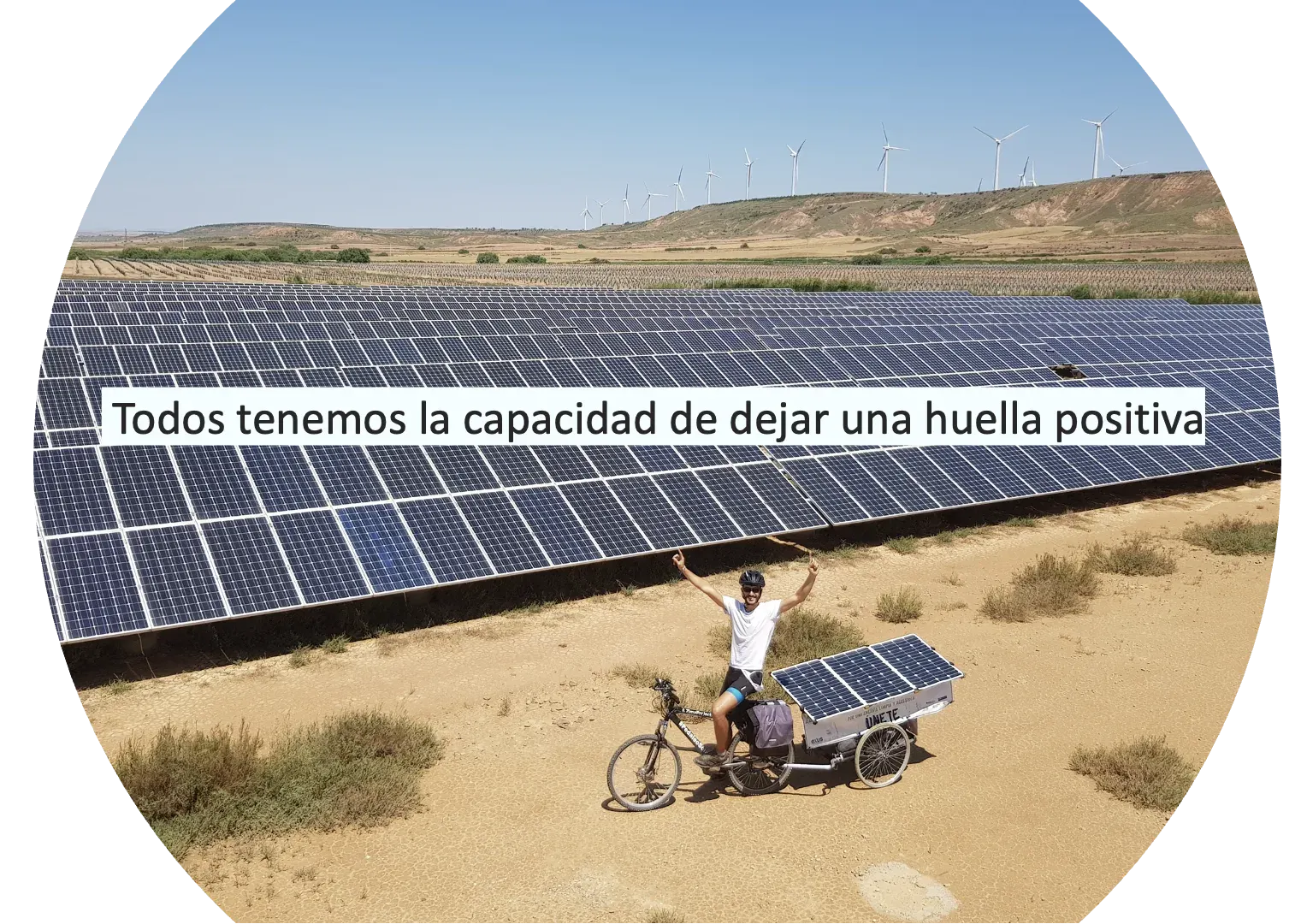
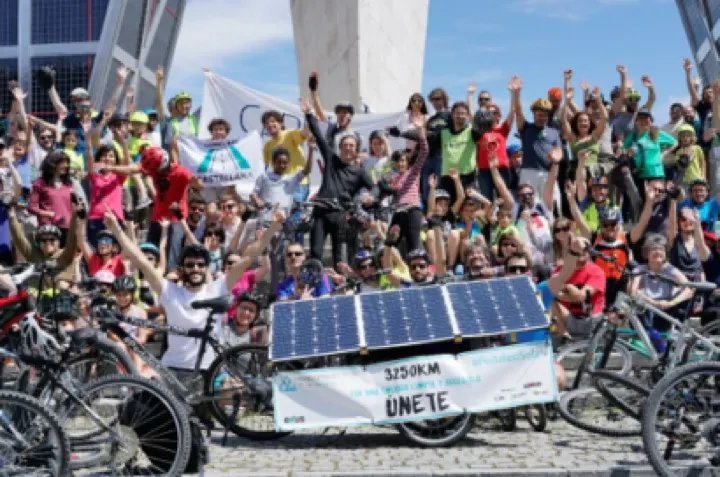
The bike left Madrid on 3 June 2018, escorted by more than a hundred cyclists (Granada Digital). It returned three months later with 3,890 km and 25 cities behind it, in stages of 80 to 120 km (Energías Renovables).
“I had complete faith in the solar panels I had on the trailer” — Eugenio García-Calderón, at the end of the journey (Energías Renovables)
- Along the way: about 1,000 km in Almería in mid-June (Telemadrid) and 3,100 in Castro Urdiales in early August (Castro Punto Radio).
- The cyclist: Eugenio admitted that he had never been a real cyclist and that his body suffered in the first few days (Energías Renovables).
- Back in Madrid: on 6 September, at the ecooo premises, Eugenio was due to show the bike and talk about the journey (Energías Renovables).
- The whole tour: the route, the final bike rally and the end of the sun tax are told in Solar Pedalling.
What came next: solar delivery, lamps for the Amazon and Light Humanity
In Castro, Eugenio was already seeing other uses for the bike, such as deliveries in areas other vehicles cannot reach. He was not looking to commercialise his invention: what drove him was changing Spain’s electricity system (Castro Punto Radio).
- Solar delivery: in 2019 came the Solar Delivery Tricycles, electric tricycles charged with solar energy.
- Solar lamps: the idea for Light of the Amazon grew out of the tour of Spain by solar bicycle, Eugenio told the Lenovo Blog.
- Shared solar energy: at the end of 2018 he co-founded Comunidad Solar; he also co-founded Solar Crowd (Energías Renovables) and founded Light Humanity.
- More sustainable mobility: the lab’s Mobility area continues with the Aeromóvil, the Ultra-Efficient Solar Vehicle and the Electric Solar Boat.
In the media
 Solar Pedalling, the tour of Spain that will put an end to the Sun Tax — YouTube · Zima Project · 27/02/2018
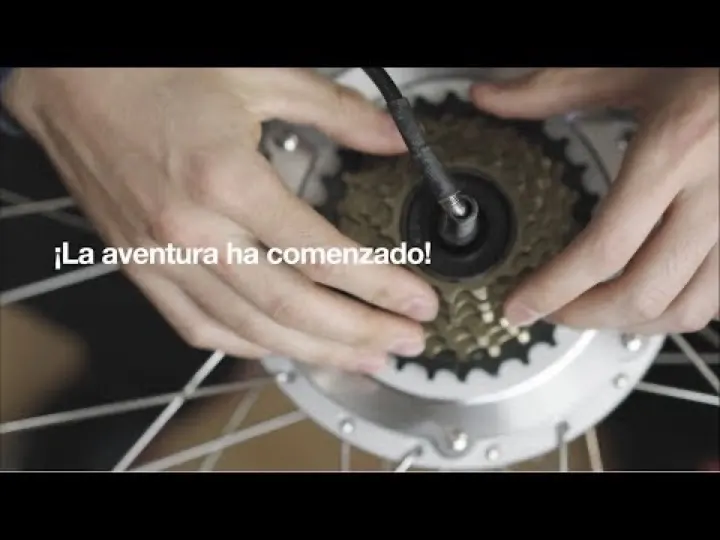 What is Pedaleo Solar? | Zima Project — YouTube · Zima Project · 18/04/2018
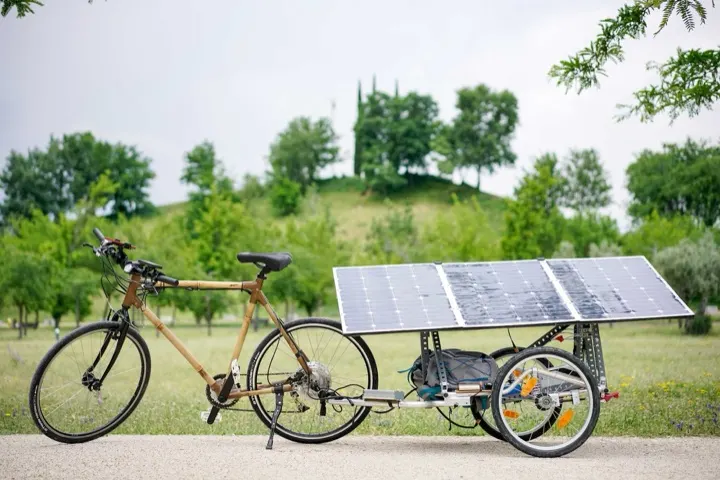 A bamboo “solar bicycle” will travel around Spain collecting signatures to promote renewable energy — El Periódico de la Energía · 30/05/2018
 'Solar Pedalling', the adventure of raising awareness of energy self-consumption: “It's possible” — elDiario.es · 04/06/2018
 Self-consumption takes a tour of Spain — Energías Renovables · 04/06/2018
 The first solar bike to tour Spain passes through Granada — Granada Digital · 12/06/2018
 Around Spain on a solar bicycle to promote energy self-consumption — YouTube · Telemadrid · 19/06/2018
 #PedaleoSolar, the extraordinary social initiative of our former student Eugenio García-Calderón — Colegio Corpus Christi Blog · 28/06/2018
 The solar bicycle touring Spain arrives in Castellón — Ciclosfera · 07/07/2018
 The engineer Eugenio García Calderón brings to Castro the solar bicycle on which he is touring Spain in support of renewable energy — Castro Punto Radio · 07/08/2018
 The Solar Pedalling challenge ends its adventure in Madrid this week — Energías Renovables · 04/09/2018
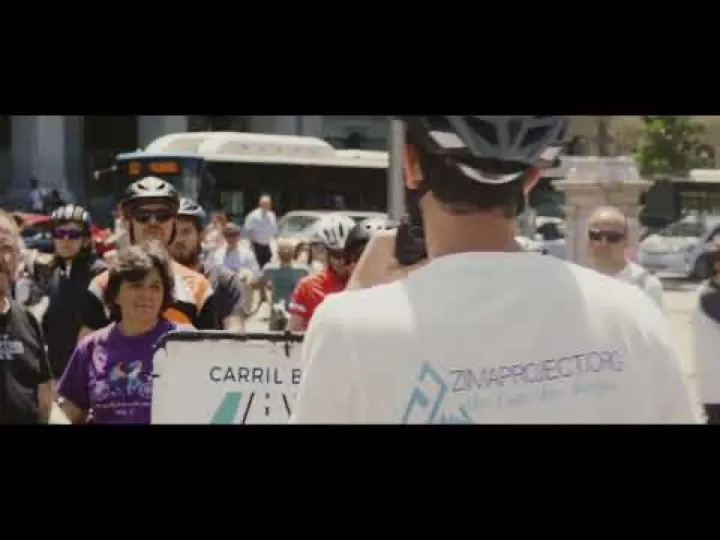 #PedaleoSolar First Tour of Spain on a Solar Bicycle — YouTube · Zima Project · 08/09/2018
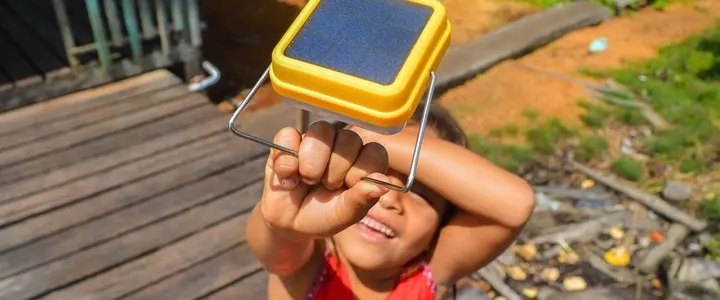 Eugenio García-Calderón, Light for humanity: “We have a responsibility to help other economies complete their energy transition” — Lenovo Spain Blog · 28/01/2021
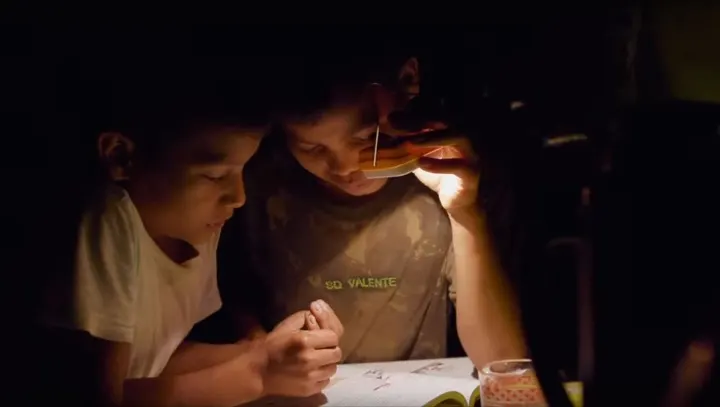 Solar energy thumbs its nose at kerosene in the Amazon — Yorokobu · 25/05/2021
 “When I discovered the potential of solar energy I decided to become an energy activist” — Energías Renovables · 27/05/2024