Solar Delivery Tricycles
Electric tricycles charged with solar energy
Solar-powered delivery: electric cargo vehicles that carry their own panel
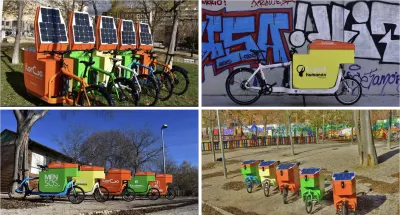
Solar Delivery Tricycles, a 2019 project of Light Humanity's Ecosocial Innovation Lab, brings solar energy to delivery work: its electric vehicles recharge from a panel mounted on the lid of the cargo box.
- What it is: electric delivery tricycles charged by solar energy.
- How they recharge: with a solar panel on the lid of each cargo box.
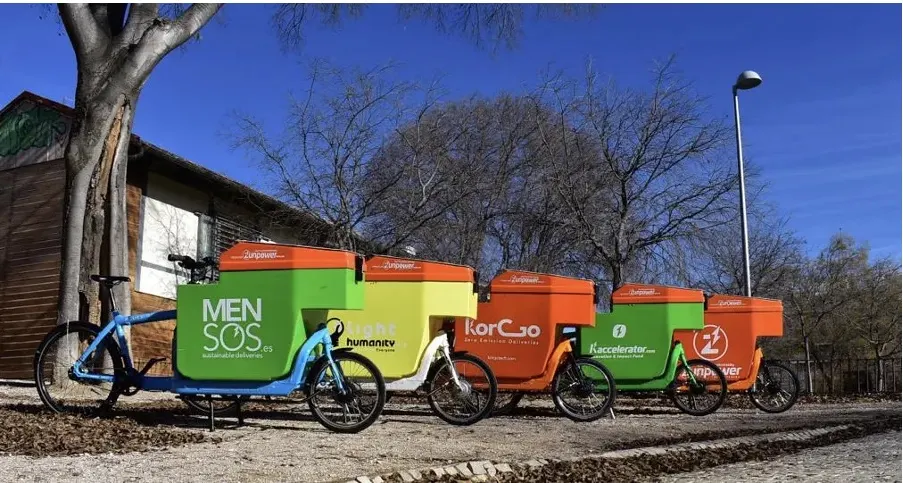
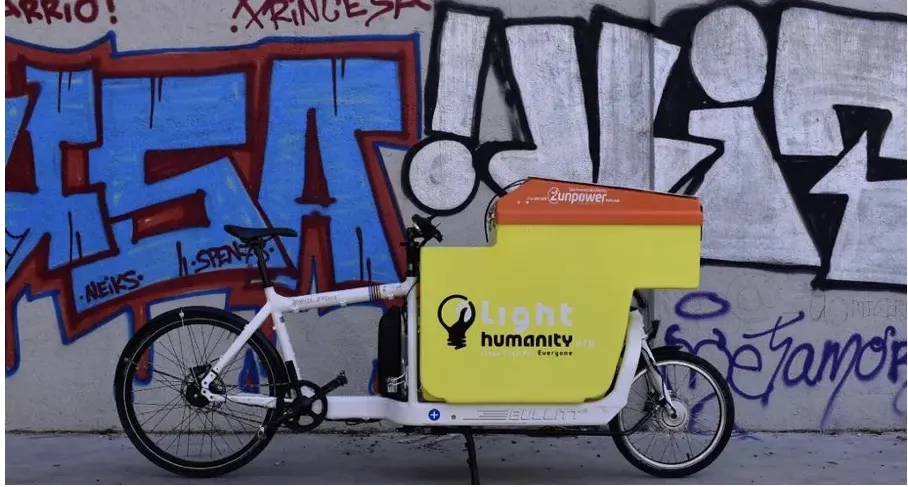
- On the cargo boxes: the logos of Light Humanity, Zunpower, KorGo, Mensos and Kaccelerator.
- What for: deliveries; KorGo and Mensos, two of the brands on the cargo boxes, presented themselves as last-mile courier services.
- Where it fits: it is one of the five projects in the lab's Mobility area, the one that followed the 2018 Solar Bicycle.
From the 2018 solar bicycle to the 2019 solar delivery tricycles
A year earlier, in 2018, Eugenio García-Calderón rode around Spain on a solar bicycle with Solar Pedalling, the campaign against the sun tax by Zima Project, the forerunner of Light Humanity. As Yorokobu reported, his message was that solar energy “was not only sustainable, but could power any vehicle”.
- 2018: the Solar Bicycle, an electric bicycle with a trailer of solar panels, travels around Spain.
- 2019: the same year saw the start of Light of the Amazon, solar lamps for families in the Brazilian Amazon, and The Green Voice, a solar loudspeaker for the climate marches.
Delivery vehicles with a solar panel on the cargo box lid
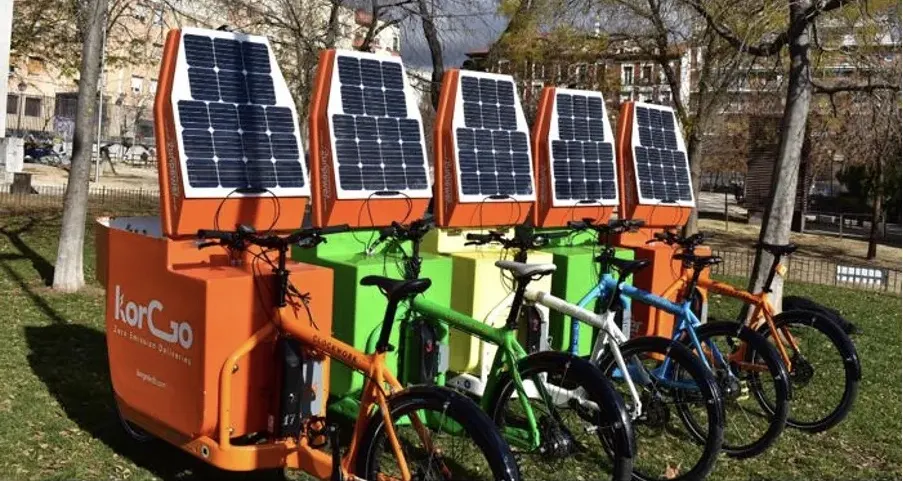
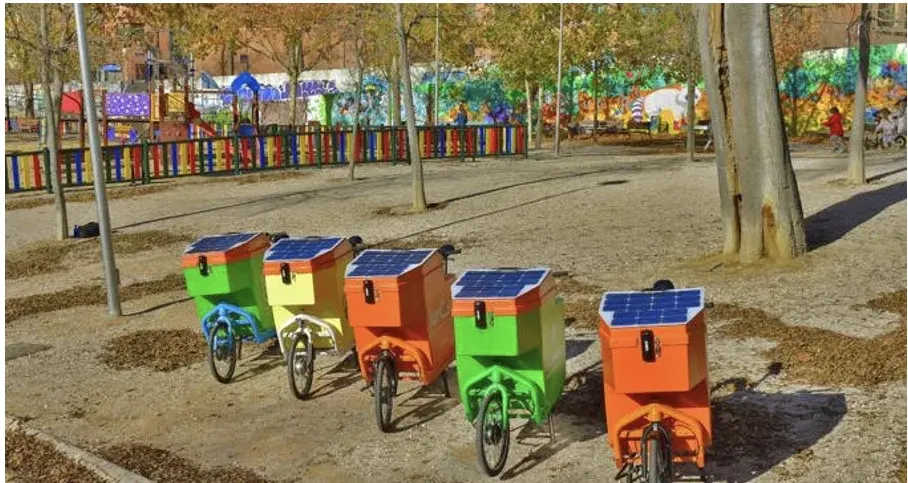
The energy travels with the load: the solar panel covers the lid of the cargo box. This way, the delivery vehicle carries with it the source that recharges it.
- The reason: in March 2019, ESMARTCITY saw last-mile delivery with clean vehicles as a way of reducing combustion and heavy-duty vehicles in cities.
- The panel: one per cargo box, fixed to the lid and raised along with it.
- The cargo box: sits in front of the rider, painted orange, green or yellow, with an organisation's logo.
- The lid: orange and bearing the Zunpower brand on all five vehicles in the group photo.
Five logos on the cargo boxes: Light Humanity, Zunpower, KorGo, Mensos and Kaccelerator
Each cargo box bears an organisation's logo. According to their own websites, alongside Light Humanity there are a vehicle brand, two last-mile courier services and an impact investment fund.
- Light Humanity: the NGO founded by Eugenio García-Calderón Huerta; its cargo box is the yellow one.
KorGo and Mensos, two last-mile courier services using cargo bikes
- KorGo: described itself as “a last-mile courier service” with “zero-emission shipments”, with a network of partners delivering by cargo bike and electric vehicle (KorGo website, 2021).
- Mensos: “sustainable bicycle courier service in Madrid”, according to its website. In March 2019, ESMARTCITY reported that it delivered from its urban distribution centre in Madrid using electric bicycles able to carry up to 100 kilos. According to the company, the deliveries made by two of its bicycles were equivalent to those of one combustion van.
Zunpower and Kaccelerator: a vehicle brand and an impact fund
- Zunpower: was KorGo's “own brand” of vehicles, offering its partners the chance to renew their fleets with “eBikes, eTricycles, cargo eMotos” at lower prices (KorGo website).
- Kaccelerator: presents itself as an impact investment fund (its website); its logo appears on one of the two green cargo boxes.
A tricycle with a solar roof and Zunpower's three-wheeled vehicle
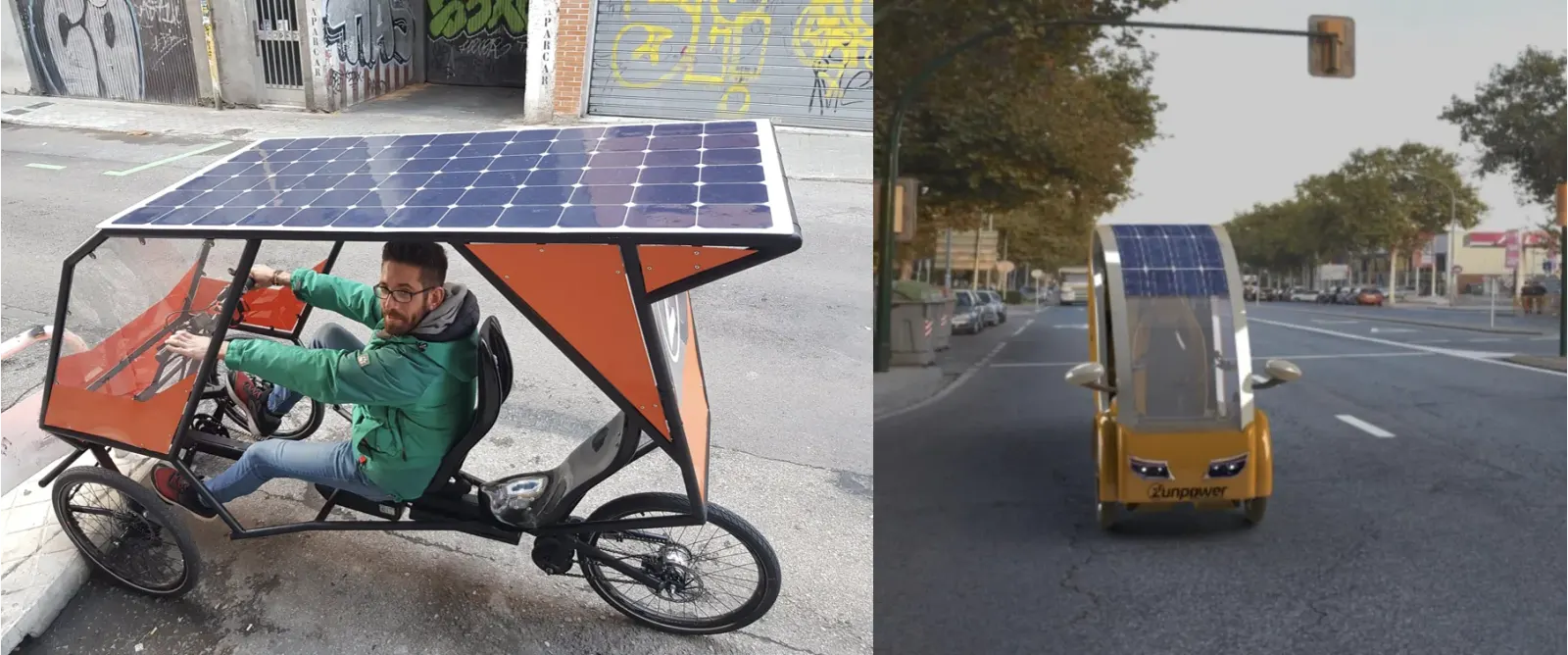
Alongside the delivery vehicles, the project archive holds two images of three-wheeled solar vehicles: a recumbent tricycle with a roof of solar panels and a 3D rendering of a Zunpower vehicle.
- The tricycle: recumbent, with orange sides and a roof of solar panels covering the driver.
- The Zunpower vehicle: faired, yellow, with a solar panel on the roof and the brand on the front; the image is a 3D rendering.
- The #StreetFighter: Zunpower's website, archived in 2021, advertised it for a shared solar mobility service yet to launch, with two solar panels, a rechargeable lithium battery and an electric motor (zunpowertech.com).
- No licence or number plate: according to that website, it was classified in the EU as an electrically power-assisted cycle (EPAC) and was 90 cm wide, to fit in a cycle lane.

After the tricycles: solar car, Aeromóvil and solar boat in the Mobility area
The lab's Mobility area later added three more projects:
- 2022: Ultra-Efficient Solar Vehicle, the investment in the Aptera project, an efficient solar car.
- 2024: Aeromóvil, a light, aerodynamic vehicle that runs on very little energy.
- 2024: Electric Solar Boat, an electric vessel with solar panels to carry 20 passengers on the Amazon River.