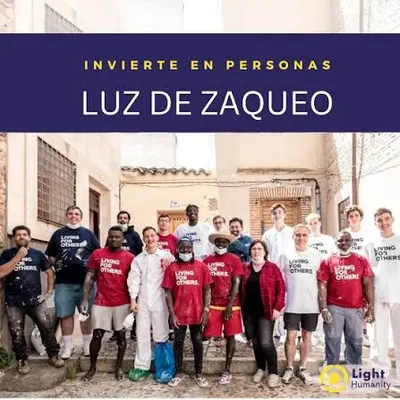
Zaqueo Centre Solar
Solar energy for the Zaqueo shelter in Toledo
Remote self-consumption: solar energy from Cáceres for the Zaqueo shelter in Toledo
Casa Zaqueo, a shelter for migrants in the historic centre of Toledo, could not install panels on its roof because of heritage protection rules. In 2022, Light Humanity sought another route: remote self-consumption, with 20 solar panels of its own at a plant in the province of Cáceres and a crowdfunded loan campaign to raise the €9,420 they cost.
- What it is: solar energy through remote self-consumption for Casa Zaqueo, a shelter in Toledo: its panels are at a solar plant in Extremadura, not on its roof.
- Who it's for: more than 40 homeless migrants, according to Light Humanity.
- The problem: electricity bills of €800 to €1,200 a month in early 2022, and a roof in the historic centre where panels are not allowed.
- The financing: “Light of Zaqueo”, a five-year crowdfunded loan campaign to raise €9,420 on Light Humanity's platform, now Solar Crowd.
- Partners: Casa Zaqueo, with the support of Cáritas; the loan page showed the logos of Som Energia, Comunidad Solar, Suntropy and Cáritas itself as main partners.
- Result: by June 2023, Solar Crowd was already counting the Toledo centre among the shelters with solar energy.
- What came next: this case gave rise to the remote self-consumption model of Comunidad Solar, for those who cannot install panels on their roofs.
Casa Zaqueo, a shelter for migrants in Toledo

Casa Zaqueo is both a shelter and the social organisation that runs it, in the historic centre of Toledo. According to Light Humanity's loan page, it provides housing and meals for more than 40 homeless migrants.
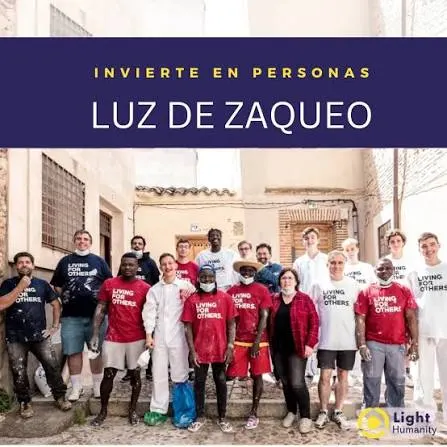
- In charge: Sagrario and Gerardo, who have run the centre for more than 25 years, according to Light Humanity.
- What it aims to do: provide a roof, combat isolation through housing shared with young working volunteers, and help residents regularise their status so they can apply for jobs, according to the Solar Crowd project page.
- Its figures: 70% of residents have found housing on leaving and 65% have found work within a year, according to the same page.
- Its backing: institutional and financial support from Cáritas, and donations from neighbourhood associations and parishes in Toledo and Madrid.
Electricity bills of up to 1,200 euros a month put the centre at risk
In early 2022, Casa Zaqueo was paying between 800 and 1,200 euros a month for electricity. For a centre with its resources, that cost was pushing it towards a bankruptcy that would have meant closure, Light Humanity explained, and it left the house unable to meet other needs.
- The context: electricity prices had soared and, according to Light Humanity, more than 7 million people in Spain were living in vulnerability and energy poverty.
- A problem shared by many centres: some house around 50 people without subsidies and are constantly seeking donations to pay for electricity; the building may be provided free of charge, but the energy still has to be paid for, Eugenio García-Calderón Huerta explained in Energías Renovables.
Historic heritage: Casa Zaqueo's roof could not take solar panels
The usual solution, putting panels on the roof, was not an option. The house stands in an old town full of medieval Jewish, Arab and Christian monuments, and heritage rules do not allow photovoltaic panels on its roofs.
“So we looked for solutions and… we arrived at remote self-consumption” — Eugenio García-Calderón Huerta, founder of Light Humanity, on the Toledo case (Energías Renovables, 2024)
- What they found: when they arrived to install the panels, the team came up against heritage protection on historical and cultural grounds, which prevented the work from going ahead.
- A limit across the whole city: in the historic centre of Toledo, a World Heritage Site since 1986, photovoltaics are heavily restricted (Energías Renovables).
Remote self-consumption: 20 solar panels of its own at a plant in Cáceres
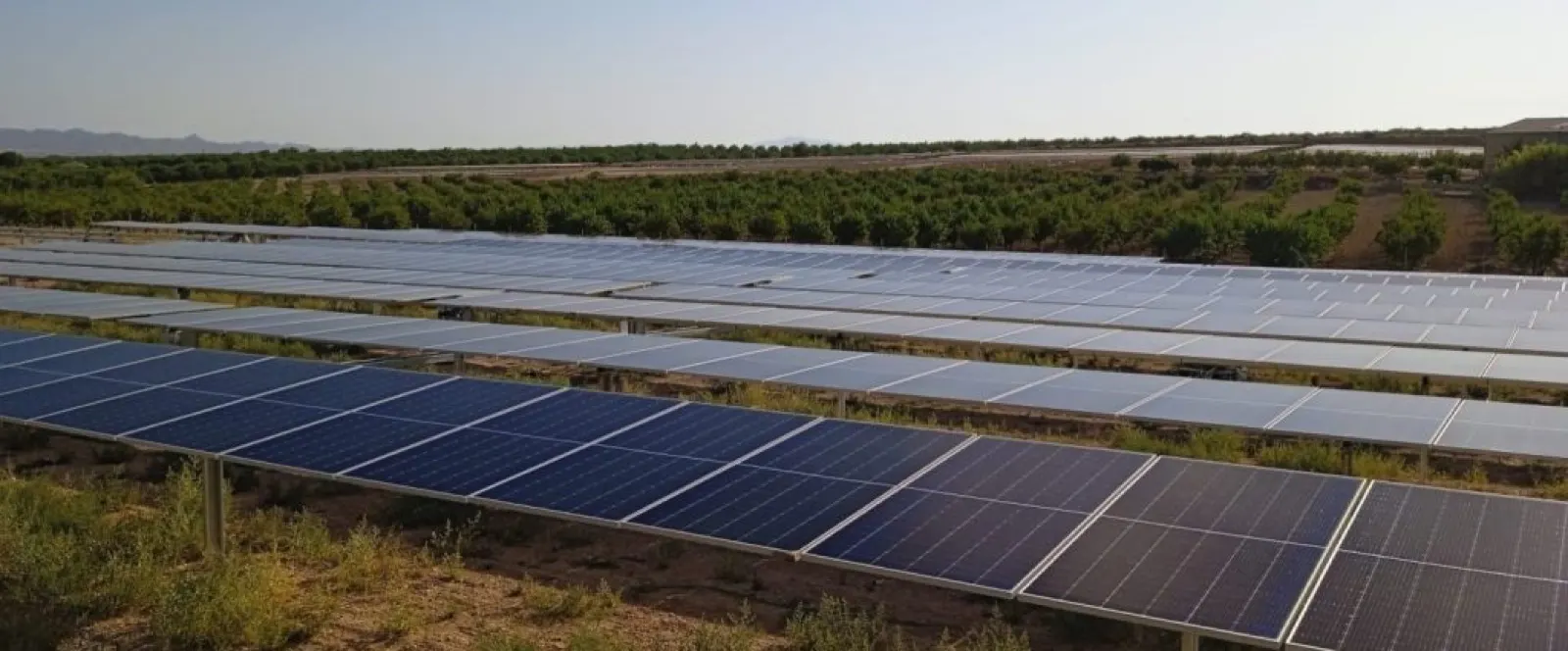
The answer was remote self-consumption. The centre would own 20 solar panels of 450 W at a photovoltaic plant in the province of Cáceres, in Extremadura, without touching its roof. At a plant like this, Light Humanity explained on the loan page, costs are far lower than in conventional self-consumption: some fixed costs are avoided and others are shared.
- Capacity: 9 kWp, with projected output of 11,040 kWh a year.
- Savings: the electricity bill could fall by up to 80%, according to Light Humanity's calculations.
- Expected lifespan: 30 years of solar energy for the centre, according to Light Humanity.
- The purpose: with the money saved, the centre would be financially stronger and better able to support, train and integrate the people who live there.
Light of Zaqueo: a crowdlending campaign to raise 9,420 euros at 1.75% a year
To pay for the panels, Light Humanity opened a single funding round on its lending platform: “Light of Zaqueo”. In early 2023 the campaign was still open, with individuals from its community lending money to the project, to be repaid with interest over five years.
- The precedent: loans from the community had already financed the solar installations in Cañada Real; as the money was repaid, more people were encouraged to lend, including for shelters, Eugenio said in Energías Renovables.
- Return: 1.75% a year, or up to 2.5% by bank transfer; for every 500 euros lent, the campaign promised to return 532.42 within five years.
- Guarantees: Casa Zaqueo's guarantee fund backed 100% of the repayments, and Light Humanity's contingency fund could cover, in the worst case, 25% of the loan.
2023: Toledo among the solar-powered shelters backed by Solar Crowd
In June 2023, when presenting its campaign for Honduras, Solar Crowd said that in Spain it had brought solar energy to shelters in Sagunto and Toledo and at Fundación Lázaro (Energías Renovables). By November, the project page was speaking in the present tense: the 20 panels “self-supply” the centre with clean energy.
- The other two centres: Casa Nueva Sagunto and Lázaro Solar Home.
- In the press: in November 2023, Xataka listed Toledo among the places Light Humanity's energy had reached.
From Toledo to Comunidad Solar: remote self-consumption for those without a roof
In 2024, Eugenio García-Calderón confirmed to Energías Renovables that the idea of remote self-consumption was born in Toledo. After running up against the heritage rules, the team began developing grid-connected solar parks and created the energy retailer Comunidad Solar to deliver that electricity, through the bill, to people who cannot put panels on their roofs.
- Cheaper, according to Eugenio: although the cost of transporting the energy over the grid still has to be paid, with panels of your own at a plant and their cost spread over 30 years, electricity comes to about 3 cents, compared with 15 or 20 from a traditional company.
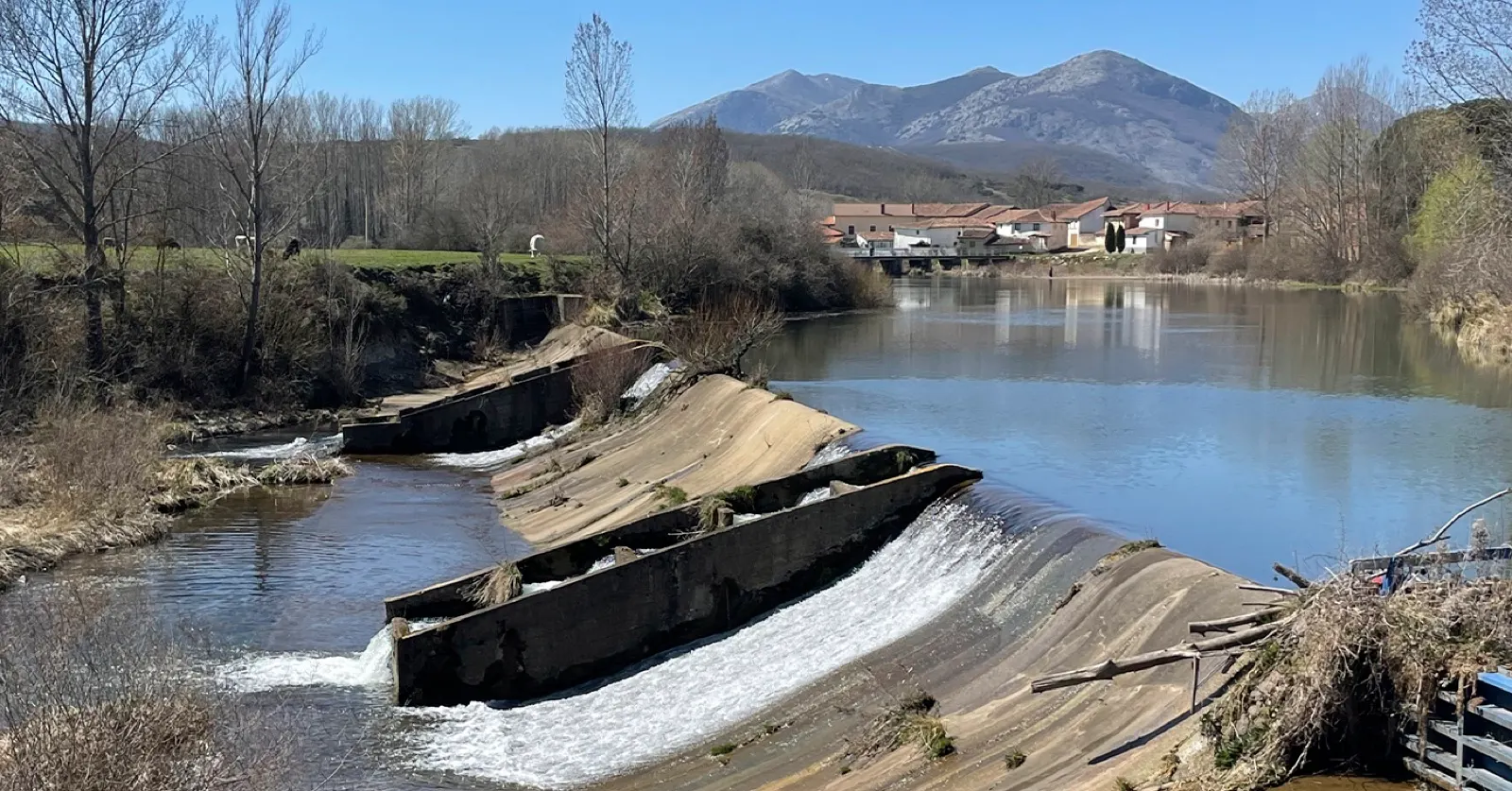
- For everyone, from 2023: in May 2023, Comunidad Solar presented its remote self-consumption service for flats and commercial premises without a roof, with solar parks in Murcia and a hydroelectric plant on the Pisuerga (Energías Renovables).
- Today: Comunidad Solar's remote self-consumption parks in Murcia and the Ligüérzana plant (Pisuerga Hydroelectric Plant) are fully subscribed; the next one is being built in Chiva (Valencia), according to its website.
In the media
 When I discovered the potential of solar energy I decided to become an energy activist — Energías Renovables · 27/05/2024
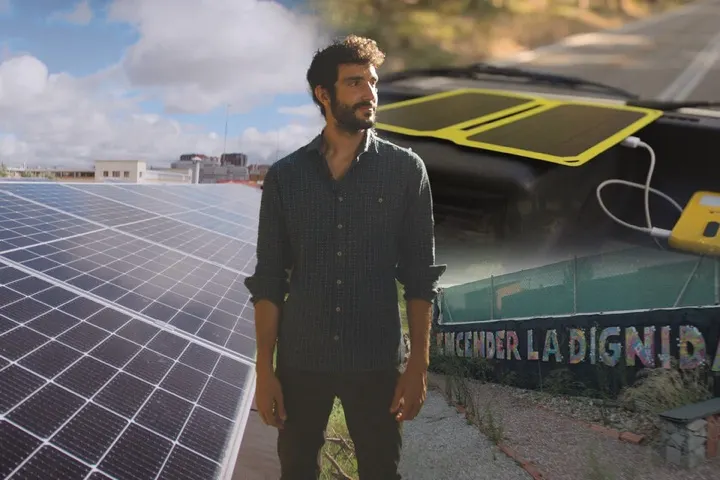 Light Humanity's solar revolution: panels and renewable energy against energy poverty — Xataka · 10/11/2023
 Solar Crowd launches a crowdfunding campaign in Honduras — Energías Renovables · 21/06/2023
 Light of Zaqueo – Light Humanity Solar Energy — Light Humanity (website archived on the Wayback Machine) · 06/02/2023
 Light of Zaqueo project — Solar Crowd